
Fruit juice powder is made by removing much of the water from juice or pulp and packing the dried product to limit moisture pickup. The process can reduce shipping weight, but powder quality depends on the fruit, formulation, drying method and storage conditions.
What Is Fruit Juice Powder?
Fruit juice powder may be produced by spray drying, freeze drying or other suitable drying methods. A final moisture target such as 1%–3% can be a formulation example, not a universal specification; the manufacturer must validate moisture, water activity, microbiological quality and shelf life for the actual product.
Fresh juice can contain around 85% water, depending on the fruit and formulation. Drying reduces water and volume, while color, flavor and sensitive nutrients may change during processing and storage. The powder is not automatically nutritionally identical to fresh juice.

Fruit Juice Powder Production Process
The process shares some upstream steps with concentrated fruit juice production, then adds a suitable drying and powder-packing stage. A typical project can be reviewed in three parts:
- Fruit preparation: fruit sorting, washing, crushing or pulping, and optional enzyme or heat treatment as required by the fruit.
- Juice preparation: fruit pulping or pressing, followed by filtration or clarification for a clear-juice powder. Cloudy products may need a different solids-handling route.
- Drying and packing: optional concentration or carrier addition, drying, powder recovery, cooling and moisture-protective packing. Sequence and equipment must be selected for the target powder.
Spray Drying Fruit Juice Powder
A spray dryer atomizes a pumpable feed into fine droplets that contact heated air. Water evaporates and the powder is separated from the exhaust stream. A typical system includes feed preparation, an atomizer, heated-air supply, drying chamber, powder collection and exhaust handling.
Fruit juices rich in sugars and organic acids can become sticky during spray drying. A carrier such as maltodextrin or gum arabic may be considered, but its amount changes the final formulation and label. Feed solids, inlet and outlet temperatures, atomizer selection and powder yield need product trials rather than one generic setting. Research on spray-dried apple juice concentrate illustrates how carriers affect powder properties.
Three common atomization approaches are pressure nozzles, two-fluid nozzles and rotary atomizers. Selection depends on feed viscosity, particle content, target particle size, cleaning needs and capacity; no one method is inherently the lowest-cost choice for every juice.
Spray Dryer Layout for Fruit Juice Powder

Applications of Fruit Juice Powder
- Reconstituted beverages: powder can be blended into a drink formulation when the intended juice content and labeling are defined.
- Food ingredients: suitable powders can contribute fruit flavor and color to bakery, confectionery and dairy-style products.
- Further processing: fruit peel or pomace powder is a separate by-product category and should be specified independently from juice powder.
Applications may include instant drink mixes, baked goods, snacks and desserts, subject to the powder's ingredient composition and the finished product's labeling and food-safety requirements. Suitability for infant food, supplements or medical use needs separate formulation and regulatory review.
Advantages and Storage Considerations for Fruit Powders
- Lower transport weight: reducing water can reduce weight and volume compared with the original liquid feed.
- Flexible formulation: powder can be dosed into different compatible beverage and food products.
- Storage control: shelf life depends on moisture pickup, oxygen exposure, packaging barrier and validated storage conditions; drying does not remove all water or guarantee a fixed shelf life.
- Fruit Juice Production Line
- Citrus Juice Processing Line
- Mango juice production line
- Apple Juice Processing Line
- Pineapple Juice Processing Line
- Pomegranate juice processing line
- Lychee juice processing plant
- Grape Juice Processing Line
- Full Automatic Milk Processing Plant
- Plant Protein Beverage Production Line
- Coconut Water Processing Line
- Fruit Crusher Machine
- Tubular Fruit Preheater
- Steam Jacketed Kettle
- Fruit Belt Press Filter
- Spiral Juice Extractor
- Fruit Peeling and Squeezing Machine
- Citrus Fruits Peel Essential Oil Extractor
- Double Screw Extractor for Grape
- Fruit Pulping Machine
- Mango Peeling and Destoning Machine
- Grape Destemmer Crusher
- Automatic Coconut Cutting Machine
- Tender Coconut Half Cutting Machine
- grape wine squeezing machine
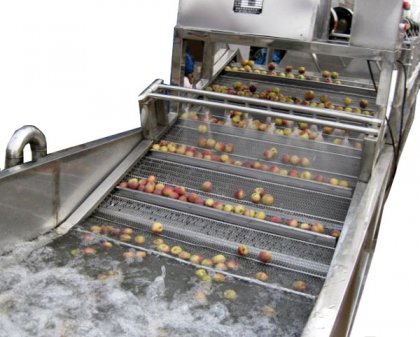

Compare four industrial fruit washing machine types and AGICO bubble washer models. Select by capacity, cleaning action, materials and fruit handling....
Follow six industrial mango juice processing steps, from sorting and pulping to blending, heat treatment, filling and cooling. See equipment choices and figures to confirm....
Compare gravity, pressure, vacuum, flow-meter and weighing juice filling machines. Learn how beverage type, bottle, capacity and cleaning needs guide selection....