
Pineapple juice processing commonly includes fruit selection, washing, preparation, extraction, optional filtration, and product-specific treatment and filling. Equipment and operating conditions depend on the intended juice, package and capacity.

Choose suitable pineapples
Select sound fruit at a maturity suitable for the recipe. Remove rotten, moldy or badly damaged fruit. Fruit maturity should be assessed against the chosen juice specification. By-products from other pineapple operations should be assessed for suitability and handled hygienically before any use in juice.
A fruit sorting machine can help present fruit for inspection. The exact sorting method depends on fruit size, condition and line layout.


Wash pineapples
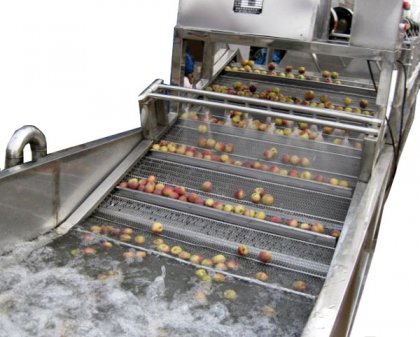
Washing removes visible soil and can reduce some surface contamination, but it does not guarantee that pesticide residues or harmful microorganisms have been eliminated. Brush-and-spray or bubble washing may be selected according to the fruit and process. The linked fruit washing machine is one equipment option; washing conditions and water controls still need to be specified for the line.

Extract pineapple juice or pulp
Pulping and squeezing equipment separate fruit tissue and juice to different degrees. Yield, clarity and retained pulp depend on fruit condition, machine settings and any later filtration. A second extraction with added water changes the formulation and should be assessed against the intended product specification.

Integrated preparation equipment can combine peeling and extraction steps. Check the published model table and a product trial for the capacity and material specification of the selected pineapple peeling and extracting machine; capacity varies by model.

Filter to the required texture
Some juices are filtered to reduce coarse pulp, while others intentionally retain more fruit solids. Select a screen and filtration method for the target texture. Particle size and removal of suspended solids vary by configuration.

Choose subsequent process steps
- Degassing: may reduce entrained air when required by the product and package; it does not by itself prevent all oxidation or package corrosion.
- Heat treatment: choose and validate time and temperature for the actual juice and food-safety hazards. One temperature alone does not establish product safety.
- Cooling: set the outlet temperature for the next operation and package; Cooling targets vary by process.
- Concentration: remove water only when making a concentrate and set soluble-solids targets for that product rather than applying one figure to all pineapple juices.
- Filling: select hygienic filling and packaging conditions for the validated process and intended storage conditions.

Assess finished pineapple juice quality
Appearance and taste are useful checks but do not establish food safety or compliance. Define product-specific tests for soluble solids, acidity, microbiological quality and relevant contaminants under the requirements of the destination market. A taste dilution test or fixed contaminant numbers from another product do not establish compliance.
- Fruit Juice Production Line
- Citrus Juice Processing Line
- Mango juice production line
- Apple Juice Processing Line
- Pineapple Juice Processing Line
- Pomegranate juice processing line
- Lychee juice processing plant
- Grape Juice Processing Line
- Full Automatic Milk Processing Plant
- Plant Protein Beverage Production Line
- Fruit Crusher Machine
- Tubular Fruit Preheater
- Steam Jacketed Kettle
- Fruit Belt Press Filter
- Spiral Juice Extractor
- Fruit Peeling and Squeezing Machine
- Citrus Fruits Peel Essential Oil Extractor
- Double Screw Extractor for Grape
- Fruit Pulping Machine
- Mango Peeling and Destoning Machine
- Grape Destemmer Crusher
- Automatic Coconut Cutting Machine
- Tender Coconut Half Cutting Machine
- grape wine squeezing machine

Compare four industrial fruit washing machine types and AGICO bubble washer models. Select by capacity, cleaning action, materials and fruit handling....
Follow six industrial mango juice processing steps, from sorting and pulping to blending, heat treatment, filling and cooling. See equipment choices and figures to confirm....
Compare gravity, pressure, vacuum, flow-meter and weighing juice filling machines. Learn how beverage type, bottle, capacity and cleaning needs guide selection....