
Price reference of fruit juice beverage equipment
The price of a fruit juice beverage line depends on the product, package, usable capacity and equipment included in the offer. A quotation for a single filler cannot be compared directly with a line that also includes washing, extraction, treatment, conveyors, packing and controls. Ask each supplier to price the same written specification and list its exclusions.

Compare materials in product contact, cleaning provisions, utilities, installation, commissioning, training, documentation, spare parts and warranty. Request the assumptions behind output and yield figures. Freight, site preparation, import charges where applicable and operating costs can change the overall project cost. Neither a low price nor a high price by itself proves machine quality or supplier support. The FAO juice plant planning guide highlights throughput, maintenance, sanitation, utilities and supplier reliability as factors to assess.
There is no useful universal price for all fruit juice beverage equipment. For a meaningful quote, provide the fruit or ingredients, recipe, package and size, target output, operating schedule and available utilities. Compare written acceptance criteria and the scope of after-sales support before choosing an offer.
How to use fruit juice beverage equipment
Use and maintenance depend on the actual machine and approved production process. Follow the model manual and site procedures for startup, product changeover, cleaning and shutdown. Packaging conditions also depend on the beverage and package; an absolute vacuum is not a universal requirement. Product treatment, filling and storage should be established for the intended product and shelf life.

During operation, check the machine's displayed alarms, fill accuracy, leaks and other controls specified by the manufacturer. Keep guards and interlocks in place. Record deviations and stop if the machine shows unsafe motion, leakage or a product-quality concern. Trained personnel should investigate recurring faults rather than repeatedly changing settings without a diagnosis.
Before accessing moving parts, opening lines, tightening components, lubricating, cleaning inside guarded areas or making repairs, apply the site's hazardous-energy isolation procedure and control stored electrical, pneumatic, hydraulic and thermal energy. A stopped motor alone does not make the machine safe. See OSHA's hazardous-energy guidance. Follow the manufacturer's food-contact cleaning, inspection and lubrication instructions; use only approved lubricants where applicable.
For seasonal storage, clean and dry the equipment according to its manual, protect components as specified and document the condition before shutdown. Inspect and recommission it under the approved procedure before the next production run. Ask the supplier for model-specific operating instructions and service terms when planning a line.
- Fruit Juice Production Line
- Citrus Juice Processing Line
- Mango juice production line
- Apple Juice Processing Line
- Pineapple Juice Processing Line
- Pomegranate juice processing line
- Lychee juice processing plant
- Grape Juice Processing Line
- Full Automatic Milk Processing Plant
- Plant Protein Beverage Production Line
- Coconut Water Processing Line
- Fruit Crusher Machine
- Tubular Fruit Preheater
- Steam Jacketed Kettle
- Fruit Belt Press Filter
- Spiral Juice Extractor
- Fruit Peeling and Squeezing Machine
- Citrus Fruits Peel Essential Oil Extractor
- Double Screw Extractor for Grape
- Fruit Pulping Machine
- Mango Peeling and Destoning Machine
- Grape Destemmer Crusher
- Automatic Coconut Cutting Machine
- Tender Coconut Half Cutting Machine
- grape wine squeezing machine
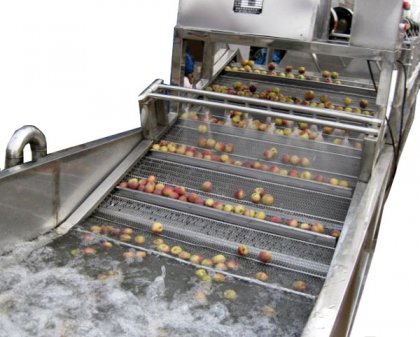

Compare four industrial fruit washing machine types and AGICO bubble washer models. Select by capacity, cleaning action, materials and fruit handling....
Follow six industrial mango juice processing steps, from sorting and pulping to blending, heat treatment, filling and cooling. See equipment choices and figures to confirm....
Compare gravity, pressure, vacuum, flow-meter and weighing juice filling machines. Learn how beverage type, bottle, capacity and cleaning needs guide selection....